Mold on windows is not just an eyesore; it can also pose serious health risks. This common problem can arise from excess moisture, poor ventilation, or leaks, leading to respiratory issues and damage to window frames over time. If you’re noticing black, green, or gray patches on your windows, it’s crucial to address them promptly. In this guide, we’ll explore the causes of mold growth and provide effective strategies for removing it and preventing its return.
Understanding Mold Growth on Windows
Mold is a type of fungus that thrives in damp environments. For windows, mold typically forms due to a combination of moisture accumulation, such as condensation, leaks, or high humidity levels. Common areas where mold appears include:
• Around the edges of window frames: Moisture can easily collect here.
• On window sills: These surfaces often trap condensation.
• In the corners of the window: Moisture tends to become trapped in these areas.
Root Causes of Mold on Windows
Identifying the underlying causes of mold is essential for effective removal and prevention:
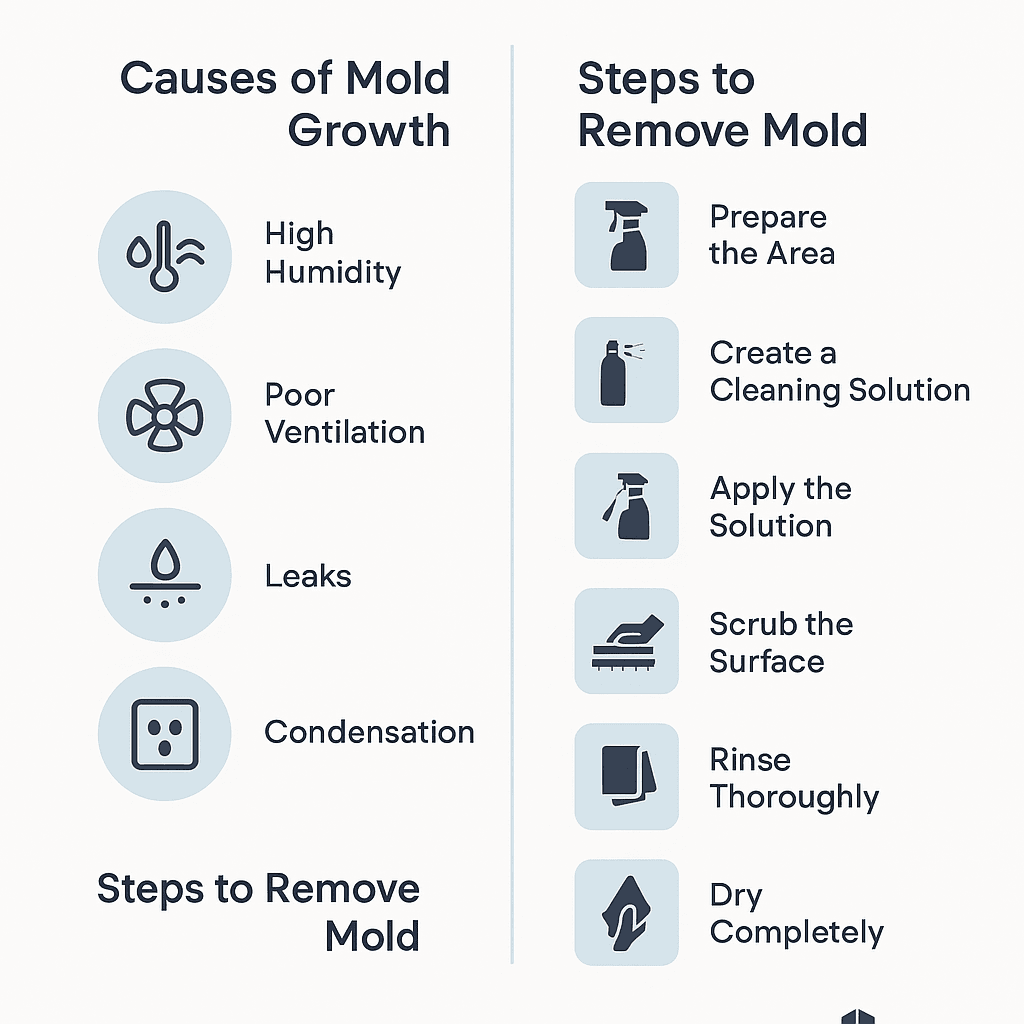
1. High Humidity Levels: Environments with humidity above 70% provide ideal conditions for mold.
2. Poor Ventilation: Stagnant air can lead to trapped moisture.
3. Leaks: Water damage from leaking pipes or roofs can create breeding grounds for mold.
4. Condensation: Warm, humid air meeting cool window surfaces leads to condensation, fostering mold growth.
Step-by-Step Guide to Removing Mold
1. Prepare the Area:
o Use a soft-bristled brush or non-abrasive scrubber to remove loose debris.
2. Create a Cleaning Solution:
o Mix one part bleach to ten parts water in a spray bottle (wear gloves and a mask).
3. Apply the Solution:
o Spray the affected area and let it sit for 10-15 minutes to help break down the mold.
4. Scrub the Surface:
o Gently scrub the moldy area, avoiding harsh materials that could damage the frame.
5. Rinse Thoroughly:
o Use a damp cloth to wipe away the cleaning solution and any remaining mold.
6. Dry Completely:
o Ensure the area is thoroughly dried to prevent mold from returning.
7. Address Underlying Causes:
o Once cleaned, assess and fix issues like poor ventilation or leaks.
Preventing Future Mold Growth
Taking proactive measures is key to keeping mold at bay:
• Improve Ventilation: Open windows, use fans, or install an efficient ventilation system.
• Use Dehumidifiers: Keep indoor humidity below 50% to discourage mold growth.
• Inspect for Leaks: Regularly check window frames for signs of water damage.
• Routine Cleaning: Clean windows every few months to remove dirt and moisture.
• Mold-Resistant Coating: Consider applying a mold-resistant sealant to your windows.
When to Call Professional Window Cleaners
If you encounter severe mold infestations, it’s advisable to seek help from professional window cleaners. Signs that indicate you may need expert assistance include:
• Extensive discoloration on multiple windows.
• Visible mold growth inside window cavities.
• Recurring mold issues despite self-cleaning efforts.
• Health concerns potentially linked to mold exposure.
Professional window cleaners possess the necessary equipment and expertise to effectively remove mold and address underlying issues, ensuring that your windows remain clean and safe.
Your Trusted Window Cleaning Experts in the GTA
For residents and businesses in Toronto and surrounding areas such as Markham, Newmarket, Brampton, Oakville, Burlington, Richmond Hill, Vaughan, and Mississauga, TowerCrest is here to help. With our specialized services, we ensure your windows are not only clean but also protected against mold and other environmental factors.
contact TowerCrest to discover how TowerCrest can support your property’s exterior maintenance about our commercial services for a Free Quote!
If you need professional assistance with window cleaning and mold removal, contact TowerCrest today. Let us help you maintain a clean, healthy environment for your home or business!