Commercial pavement markings · Toronto & the GTA
Parking-lot striping, accessible stalls, fire routes, stencils, and warehouse markings for property managers, building owners, and general contractors across the Greater Toronto Area.
Liability coverage
Cleared and insured
Accessible marking guidance
Quote turnaround
Toronto and surrounding region
What we mark
From a complete re-stripe to a single fire route, we create clear markings that support traffic flow, accessibility, and a professional first impression.
01
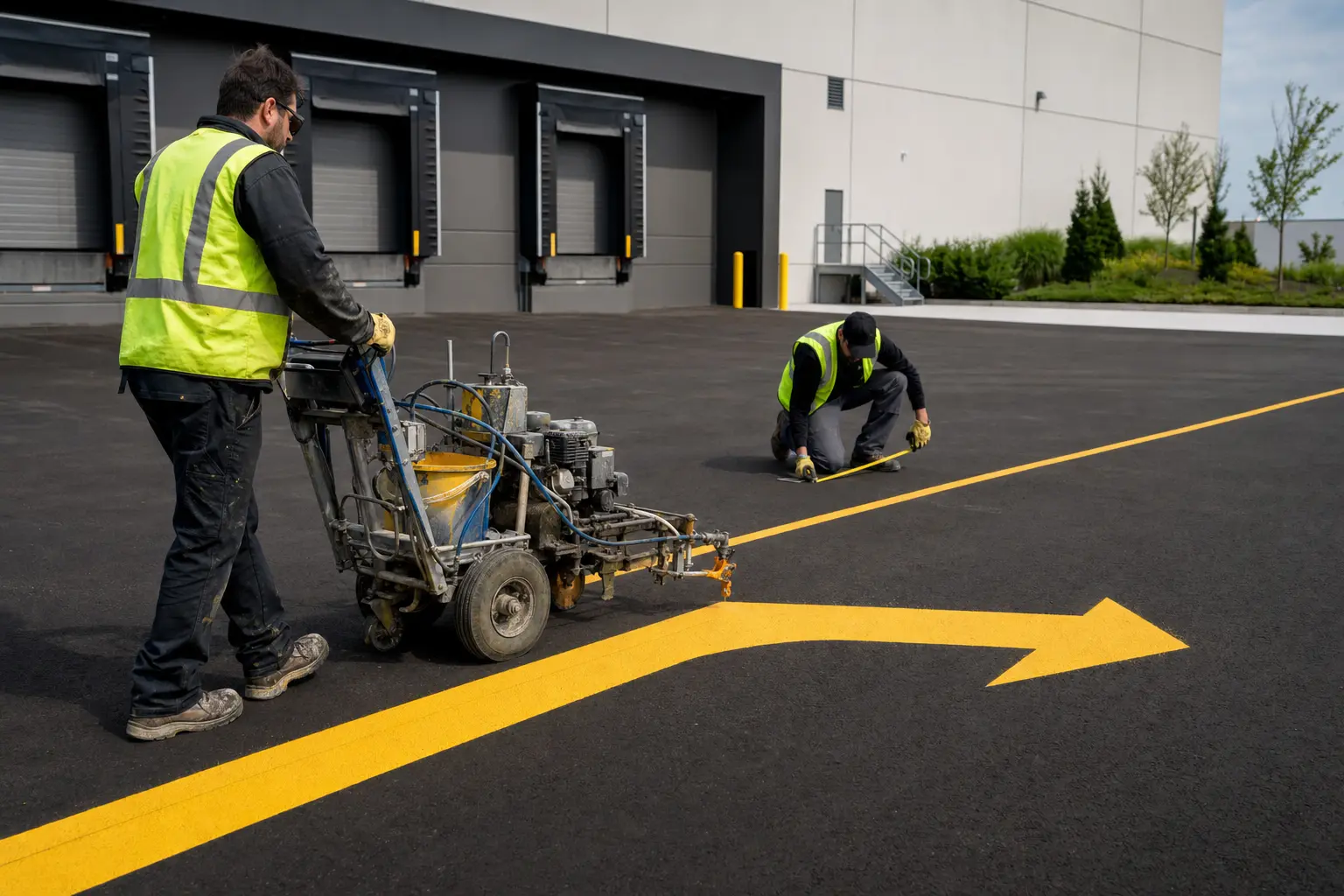
Parking stalls, drive aisles, directional arrows, stop bars, and curb markings measured for a clean, consistent layout.
02
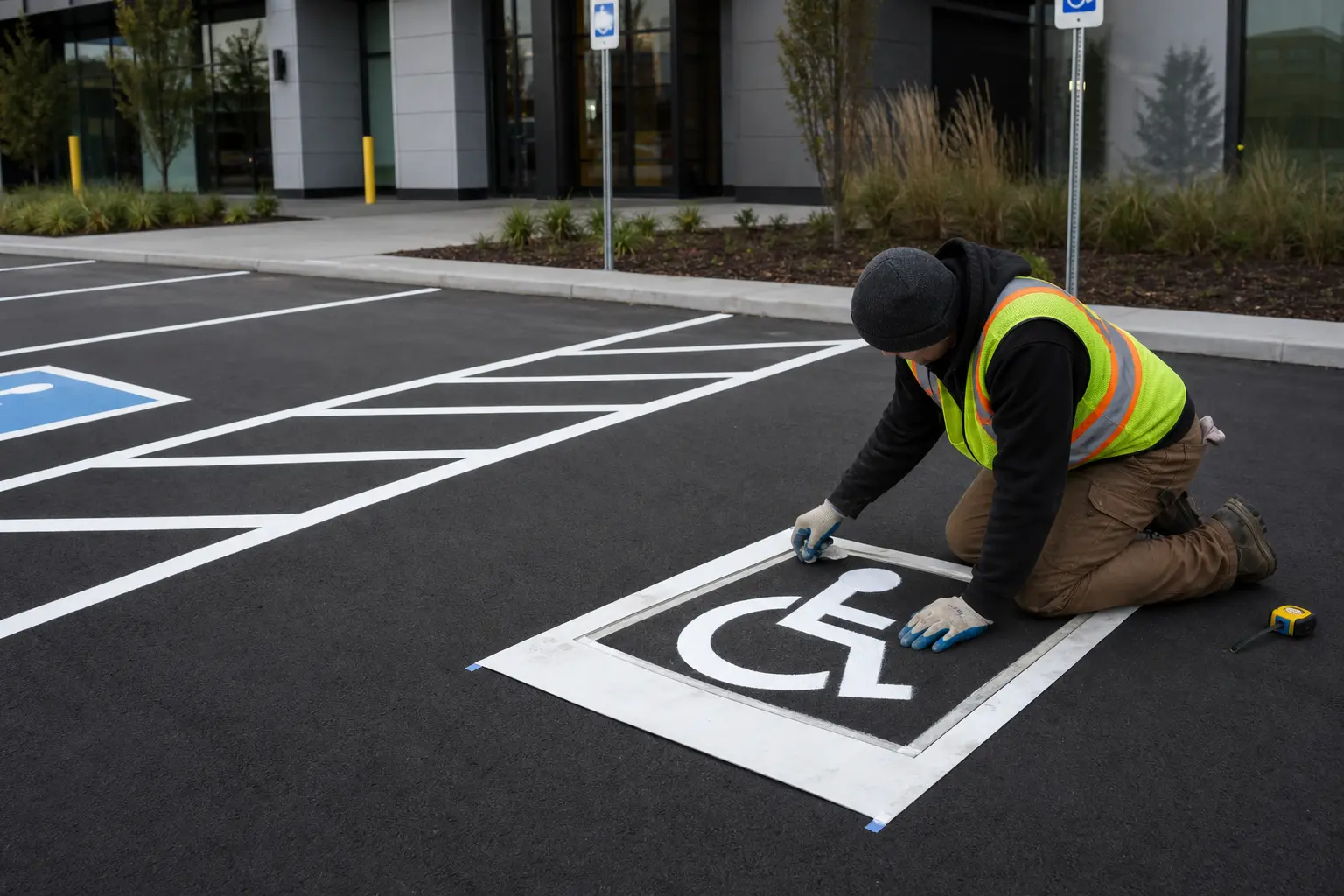
Type A and Type B stalls, access aisles, high-contrast hatching, and painted accessibility symbols based on the approved site layout.
03
Curb painting, route lines, and lettering that keep emergency access and restricted areas visibly marked.
04
Arrows, visitor, reserved, loading, EV, numbered stalls, and custom wording for commercial and multi-residential properties.
05
Unit numbers, tenant assignments, visitor parking, and designated spaces that remain easy to identify.
06
Removal or covering of outdated markings followed by a measured new layout for resurfaced or reconfigured lots.
07
Pedestrian walkways, forklift routes, safety lanes, loading areas, and hazard hatching for industrial facilities.
08
Planned refreshes that help markings stay visible despite traffic, sunlight, snow clearing, salt, and freeze-thaw cycles.
Accessible parking
Ontario’s Design of Public Spaces standard specifies minimum widths for Type A and Type B accessible parking spaces and requires access aisles with high-contrast diagonal markings. Requirements apply to applicable new or redeveloped off-street parking facilities; project-specific obligations should be confirmed with the property’s consultant or authority having jurisdiction.
Planning note: TowerCrest can execute an approved layout and flag visible concerns during assessment. Final code, zoning, signage, and quantity requirements remain project- and municipality-specific.
How a job runs
Commercial lots can usually be phased so portions remain available while markings are applied and allowed to dry.
STEP 01
Measure the site, review traffic flow, surface condition, and the supplied or proposed layout.
STEP 02
Sweep and clear debris so traffic paint can bond to asphalt or concrete.
STEP 03
Measure and mark lines, stalls, aisles, symbols, and stencils before painting.
STEP 04
Use commercial-grade traffic paint suited to the surface, season, and project requirements.
STEP 05
Protect the work area and reopen each section after the coating reaches the required dry time.
Why markings fade
Traffic, UV exposure, salt, plow blades, and freeze-thaw cycles gradually wear markings down.
Why professional application matters
Good preparation, straight measurements, and the appropriate coating system improve appearance and service life.
Common questions
Small and mid-sized lots may be completed in a few hours; larger or more complex layouts require more time. We plan phasing and access around the property’s operating needs.
Lot size, number and type of markings, surface condition, access, traffic control, removal work, and whether a new layout is required.
Not usually. Many projects can be completed in phases so parts of the property remain accessible while paint dries.
Inspection should be based on visibility and wear. Traffic levels, surface condition, winter maintenance, and coating type all affect the repainting interval.
Yes. We can paint Type A and Type B stalls, access aisles, and symbols based on an approved layout, and identify visible issues that should be reviewed before work proceeds.
Where we work
Free site assessment
Tell us the property address, approximate stall count, and any special markings or scheduling requirements.